
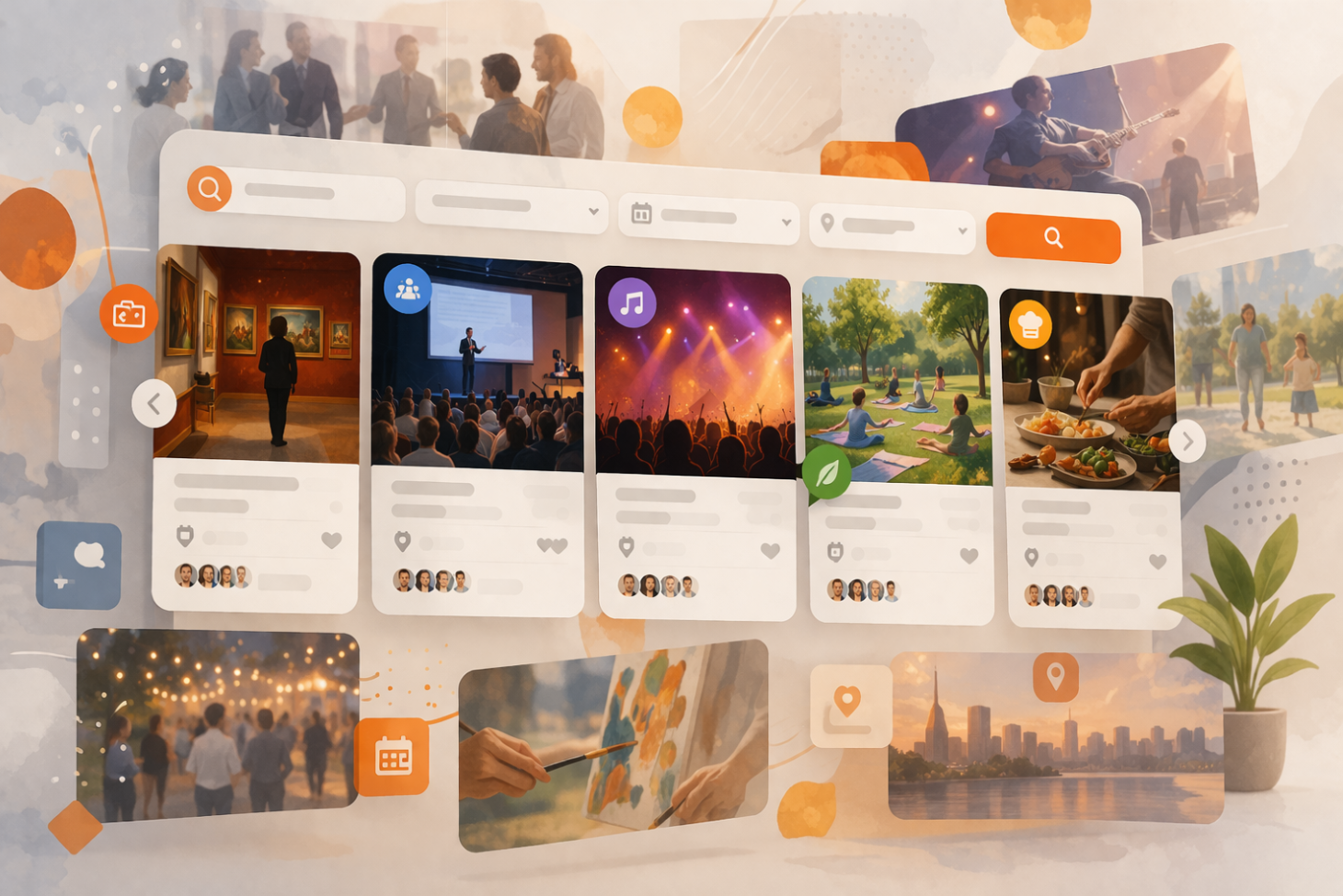
Sometimes the hardest part is not finding an
event, but understanding whether it is worth attending for you personally.
Today there are many events: lectures,
festivals, intimate gatherings, business breakfasts, family activities, online
broadcasts, masterclasses, and private events. The choice has become wider, but
people still do not have more time. That is why the event card has stopped
being just a poster. In essence, it has become a promise of an experience: what
the atmosphere will be like, who will be there, how comfortable you will feel,
and whether the event will match your mood, expectations, and real life.
The market as a whole is moving in this
direction. The events industry continues to show strong interest in offline
formats: in its industry report, Bizzabo noted that 66% of organisers planned
to hold more events, while 57% reported growing attendance at offline events.
For an ordinary user, this means one simple thing: there are more good options,
so choosing carefully matters even more.
Not every “interesting” event is
yours
Many people have had the same experience: you
read a description and think that it must be exactly the kind of thing you will
enjoy. But then you arrive and realise that, although everything seems fine, it
simply is not right for you. Too noisy. Too formal. Too long. Too much
networking. Too little substance. Or simply not the atmosphere you had
expected.
The problem is not always the event itself.
Quite often, the issue is that the card did not help the person read the format
correctly. It sold an emotion, but it did not create understanding.
A good event card should not try to persuade
everyone. Its task is subtler: to help a person recognise themselves in the
event. Or, on the contrary, to realise in time that it would be better to look
for something else. And this, incidentally, is not a disadvantage for the
organiser but an advantage. The fewer random registrations there are, the
higher the chance that exactly the right audience will come — the people who
will genuinely feel comfortable there.
What We Look for in an Event Card —
Even If We Hardly Notice It Ourselves
Usually it seems as if the decision is made
quickly: we like the cover image, the title catches our attention, we notice a
familiar topic, and we already want to click “register”. In reality, however, a
whole series of quiet questions is almost always working in the background.
First, we try to understand the format. Will
it be a calm gathering or an active social event? Will people mostly listen or
participate? Is it the kind of place you can come to alone, or is it better to
go with company? Is any preparation required? Will there be a dress code? Can
you arrive late? Is it appropriate to bring a child? Does the atmosphere suit a
couple, friends, or colleagues?
Second, people almost instantly assess the
logistics. Where is it taking place? How convenient is it to get there? How
many hours will it take? What time will it end? Is it worth crossing the entire
city for a ninety-minute programme? In ordinary life, the choice of events is
very rarely made in a vacuum. It is always competing with work, the road,
family, tiredness, the weather, and a dozen everyday circumstances.
Third, there is the question of expectations.
What exactly will I get from this? New connections? Useful information? A
beautiful evening? Time with my child? Inspiration? Practical value? Rest? If
the card does not help answer that question, even approximately, the person
begins to fill in the gaps on their own. And that is precisely where future
disappointment is born.
The More Honest the Card, the Greater
the Chance That the Event Will Be Enjoyed
Sometimes it seems that a good event card is,
above all, beautiful packaging. In fact, it is not. Attractive presentation can
catch attention, but clarity is what helps a person decide.
It is no coincidence that platforms and
organiser guides increasingly recommend including not only the basic facts when
publishing events, but also practical details: what kind of format the event
has, who it suits, when it is best to arrive, whether there is parking, how the
programme is structured, and what limitations or special features should be
known in advance. Eventbrite directly emphasises the importance of an optimised
and understandable event card as part of effective event promotion.
And that is logical. When a person sees not
only a “bright idea” but also a clear event structure, they feel more trust. It
becomes easier to relate the event to their real life rather than to an
abstract picture.
Sometimes the Most Important Things
Are Hidden in the Details
Sometimes two events on the same topic look
almost identical, yet one immediately feels like “mine” and the other does not.
The difference is often in the details.
For example, one card may simply say:
“pottery workshop”. Another may specify that it is suitable for beginners,
lasts two hours, includes all materials, has an intimate format, you can come
alone, comfortable clothing is recommended, part of the class takes place
standing up, and children under a certain age may find it difficult. At that
point, the person is no longer guided by interest alone; they gain a sense of
predictability. They understand what they are agreeing to.
The same applies to business events,
festivals, lectures, brunches, family programmes, and evening gatherings. The
more honestly the organiser describes the guest’s real experience, the less
likely it is that someone will come to “the wrong thing”.
This is generally a good principle not only
for event platforms but for modern communication of any kind: people do not
like being forced to guess. They value being spoken to in a human way.
Why Is This Especially Important?
When a platform brings together different
event formats, the card starts to play an almost decisive role. That is because
the user comes not simply to scroll through a feed, but to find something that
matches their request: by mood, timing, company, budget, and even stage of
life.
That is why, on events.syampya.com, what
matters especially is not just beautiful listings, but cards from which you can
genuinely understand the nature of the event. It is important for the user not
only to see the title and date, but also to feel: is this story about me or
not?
That is the strength of a good marketplace
for events. It does not merely present options. It helps shorten the distance
between a person and the event that suits them. Not the one that advertises
itself the loudest, but the one that is truly appropriate right now.
For some, that will be a business meeting
without unnecessary noise. For others, a family event for the weekend. For
others still, a format that feels comfortable to attend alone. And the more
precise the card, the greater the chance that the event will find “its” person.
How to Read an Event Card a Little
More Carefully
Perhaps the main question worth
asking yourself when choosing is not: “Does this look interesting?”
A better question is: “Will I feel
good in this format?”
Not in general. Not theoretically. But for
you personally — with your character, rhythm, company, expectations, and real
circumstances. If, after reading the card, you can picture your evening or your
day clearly enough, then the description has probably been done well. If too
much remains vague, it is better to look for more details or choose another
event.
Because a good event is not always the
loudest, trendiest, or most prestigious one. Very often, it is simply the event
that happens to align with you.
And that alignment usually begins with one
simple thing: an honest, clear, and vivid event card.


No comments yet. Be the first to comment!