
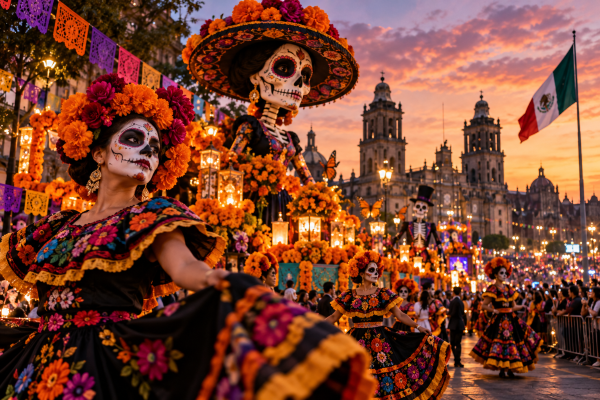
On October 24, 2026, new details emerged about the extensive programme of public celebrations planned for Day of the Dead in Mexico City, featuring large-scale parades, monumental art installations, immersive experiences and numerous free cultural events.
The celebrations will transform major streets, public squares and historic landmarks into an interconnected festival environment throughout late October and early November.
One of the programme's principal attractions is the Grand Day of the Dead Parade, scheduled for October 31. Beginning at 2 p.m., the procession will travel from Chapultepec to the Zócalo, featuring elaborate floats, giant puppets and performances celebrating Mexican cultural traditions.
This year's parade will include a musical tribute to legendary Mexican performers, including Juan Gabriel, Lola Beltrán and José Alfredo Jiménez.
Another major attraction is the Monumental Ofrenda at the Zócalo, running from October 29 to November 2. The installation will feature a 32-metre-tall Catrina sculpture, decorative sawdust carpets and thousands of traditional marigold flowers.
The city's Festival Flores de Cempasúchil brings together 140 local flower growers along Paseo de la Reforma, combining cultural celebration with opportunities for regional producers.
Immersive experiences are also becoming increasingly prominent. The installation El Camino explores traditional Mexican beliefs about the journey between life and death through artistic representations of symbolic figures and ceremonial objects.
Meanwhile, Chapultepec's Day of the Dead Festival, scheduled for October 30–November 1, will introduce illuminated installations, drone performances, music, gastronomy and interactive cultural experiences.
The programme also includes the Mega Procesión de las Catrinas on October 25, alongside nighttime cycling events and neighborhood celebrations.
For the international events industry, Mexico City's celebrations demonstrate how traditional cultural festivals can evolve into complex, city-wide event ecosystems.
The combination of public art, immersive technology, community participation and tourism-oriented programming illustrates the potential of cultural heritage to support destination marketing and experiential event development.
The extensive use of public spaces and free admission also provides an example of how major cultural celebrations can balance international tourism appeal with accessibility for local communities.







No comments yet. Be the first to comment!